


 Deutsch
 English
 Español
 Français
 Nederlands
 Português


 Share
Share




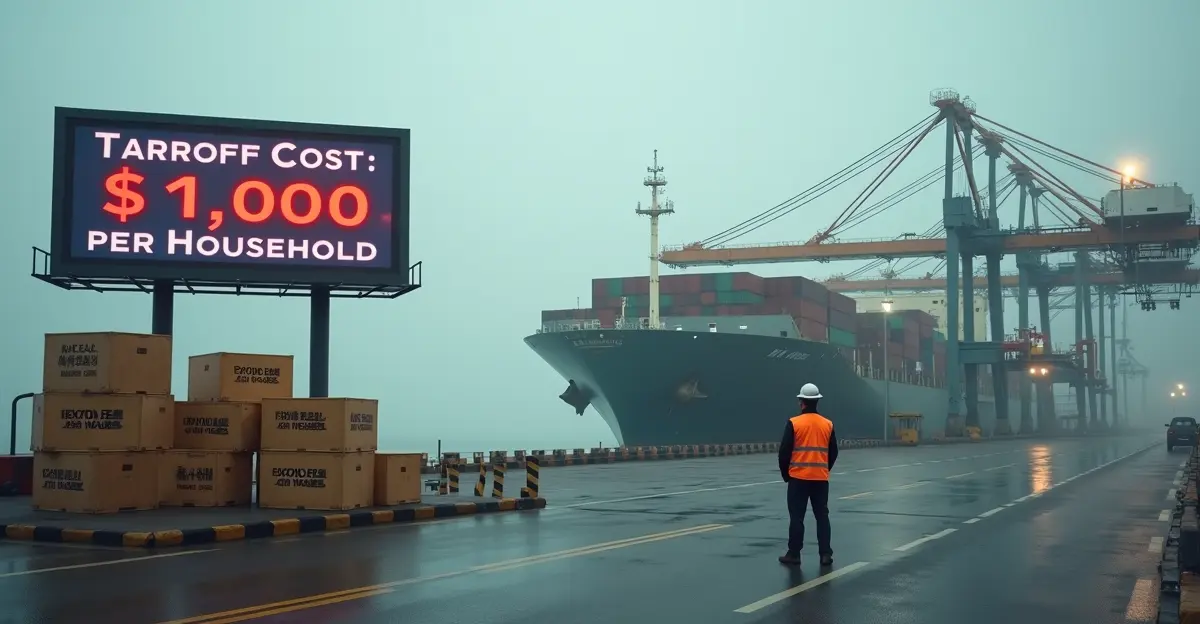
Global trade fragmentation is no longer a forecast—it is the defining structural reality of 2026. UNCTAD's January 2026 Global Trade Update confirms that 18,000 new discriminatory trade measures have been introduced since 2020, while the World Economic Forum ranks geoeconomic confrontation as the top short-term global risk. The single integrated global trading system is giving way to rival regional blocs centered on the United States, China and the European Union, forcing companies to abandon just-in-time logistics for multi-hub, nearshoring-first operations.
What Is Driving the Great Fragmentation?
The shift did not begin with a single shock. It accelerated through pandemic supply disruptions, the war in Ukraine, and a cascade of tariff and subsidy policies. According to UNCTAD's January 2026 Global Trade Update, global growth and trade are projected to stagnate at 2.6% in 2026, with the US at 1.5% and China at 4.6%. But the deeper story is the rewiring of trade relationships themselves.
The geoeconomic fragmentation that began with US-China tariffs has expanded into technology export controls, critical mineral restrictions, and carbon border mechanisms. UNCTAD's Luz María de la Mora warns that trade rules will tighten amid geopolitical ambitions, creating rival regulatory blocs. The rules are becoming less predictable, the report notes, with discriminatory measures now a permanent feature of policy rather than a temporary shock.
Three Rival Blocs Are Taking Shape
Supply chains are no longer optimizing for a single global network. They are being rebuilt around three parallel ecosystems, each with its own industrial policy, technology stack and preferred trade corridors.
- US-led bloc: The CHIPS Act, Inflation Reduction Act and FORGE initiative anchor a North American and allied network. Mexico has become the top US trading partner, with bilateral trade above $820 billion, and the USMCA 2026 review will test whether the bloc extends to 2042.
- EU-led bloc: The European Chips Act, Critical Raw Materials Act and Carbon Border Adjustment Mechanism aim to build strategic autonomy, though the EU has added less chip capacity than the US or China.
- China-led bloc: Beijing is pivoting to factory to the factories, deepening Global South ties and reaching 5nm chip production through SMIC while expanding BRICS+ and RCEP networks.
McKinsey confirms that these blocs are building parallel semiconductor, energy and critical mineral ecosystems, a costly duplication that the IMF estimates could trim global output by up to 2%.
From Just-in-Time to Multi-Hub: The Corporate Reset
The Thomson Reuters 2026 Global Trade Report finds that 72% of trade professionals cite US tariff volatility as the most impactful regulatory change, up from 41% in 2025. Firms are responding with resilience-first strategies: 65% have changed sourcing patterns, 57% renegotiated supplier contracts, and 51% are pursuing nearshoring or reshoring.
Just-in-time inventory models are being replaced by just-in-case buffers, with companies accepting 15–25% higher costs to maintain dual supply chains. Nearshoring strategies are redirecting investment toward Mexico, Vietnam, India and Eastern Europe, while 40% of firms explore AI or blockchain for trade compliance—up from 6% in 2024. Global supply chain resilience has become a board-level priority, not an operational afterthought.
South-South Trade Surges to $6.8 Trillion
One of the most significant shifts is the rise of trade among developing economies. UNCTAD reports that South-South trade reached $6.8 trillion in 2025, up from about $500 billion in 1995—a thirteen-fold increase now exceeding a quarter of world commerce. South-South trade corridors are bypassing traditional Western hubs, with the BRICS New Development Bank and AIIB rivaling World Bank commitments.
Yet the gains are uneven. Least developed countries still account for only 1.1% of world exports, far below the 2% target for 2030, and commodity-dependent economies face higher adaptation costs.
Expert Perspectives
Trade economists are increasingly blunt. UNCTAD has called for urgent WTO dispute settlement reform, noting that dispute settlement consultations have fallen from 19 per year in 2010–2019 to 8.5 in 2020–2025. The multilateral system is being hollowed out, one official warned, as regional agreements like RCEP and AfCFTA expand to cover more than 60% of global goods trade by volume.
Frequently Asked Questions
What is global trade fragmentation?
Global trade fragmentation is the breakdown of a single integrated trading system into rival regional blocs driven by tariffs, sanctions, export controls and industrial policy.
How much has South-South trade grown?
South-South trade reached $6.8 trillion in 2025, up from $500 billion in 1995, now representing over a quarter of global trade.
Why are companies abandoning just-in-time supply chains?
Firms are shifting to multi-hub and nearshoring models because 72% of trade professionals see US tariff volatility as permanent, making single-source global supply chains too risky.
What are the main rival blocs in 2026?
The three main blocs are US-led, EU-led and China-led, each building parallel semiconductor, energy and critical mineral ecosystems.
Conclusion and Future Outlook
The great fragmentation is not a cyclical correction. It is a structural transformation of global commerce. Companies that succeed in 2026 will be those that treat trade compliance as strategy, diversify across blocs, and build resilience into every node of their supply chain. The future of globalization is no longer one network—it is three overlapping, competing systems.




Follow Discussion